If you are torn between a walkable address and a place on the water, you are asking one of the most important lifestyle questions in Traverse City real estate. Both options can be appealing, but they support very different daily routines. When you understand how convenience, privacy, recreation, and price line up in this market, it becomes much easier to choose with confidence. Let’s dive in.
Why this choice matters in Traverse City
Traverse City offers a rare mix of downtown energy and easy access to East and West Grand Traverse Bay. You can live close to restaurants, shops, services, and trails, or you can lean into shoreline views, quieter surroundings, and private water access.
That is why the decision is not simply “water or no water.” In Traverse City, the real question is how you want your day-to-day life to feel once the novelty of moving wears off.
What in-town living feels like
In-town living is built around convenience. Downtown Traverse City includes more than 200 locally owned businesses and more than 50 restaurants, which gives you a compact area for errands, dining, activities, and everyday services.
If you like being able to step out for coffee, dinner, or a quick stop at a local shop, this setup can feel easy and efficient. It also tends to work well for full-time residents, relocating buyers, and second-home owners who want simpler year-round logistics.
Another major benefit is access. Downtown and nearby in-town neighborhoods connect to bike-friendly streets, multi-use paths, and waterfront spaces, so you can stay close to activity without giving up outdoor access.
What waterfront living feels like
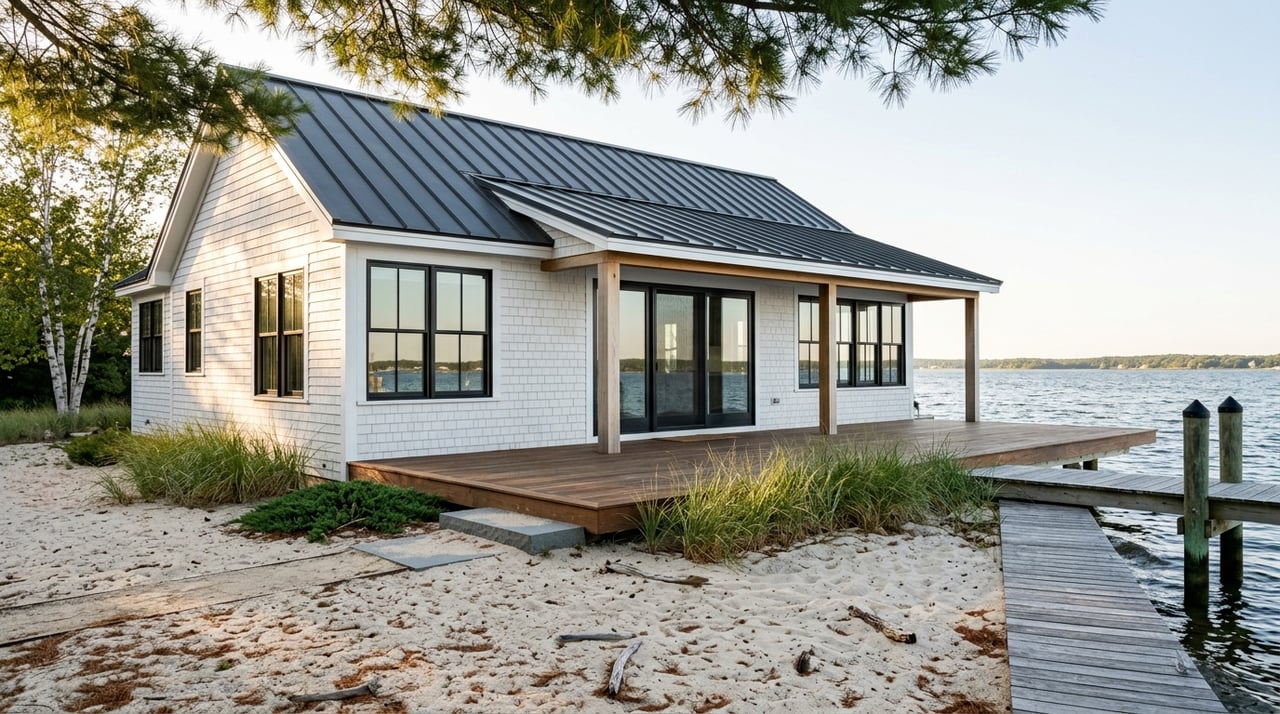
Waterfront living is centered on shoreline access, views, and a calmer pace. In Traverse City, that can mean private frontage, wooded settings, more acreage, or direct bay and lake access depending on the property.
For many buyers, this lifestyle is about more than the house itself. It is about morning views, a quieter setting, and having recreation built into your home environment.
It can also mean a more vacation-like rhythm. That tends to appeal to buyers who prioritize privacy, outdoor time, and a stronger sense of retreat in everyday life.
Traverse City also offers a middle ground
One reason this decision can feel tricky is that Traverse City does not force a hard split between downtown and the water. Downtown itself has bayfront access, beaches, parks, and trails nearby.
That creates a practical hybrid. You may be able to live close to the water without moving to a more remote shoreline setting, especially if your goal is bay access plus everyday convenience.
Walkability and daily convenience
In-town living makes car-light routines easier
If walkability is high on your list, in-town living has a clear edge. The city highlights bike-friendly streets and multi-use paths that connect neighborhoods, schools, downtown, and parks.
Downtown also has more than 3,000 vehicle parking spaces and more than 125 bicycle parking locations. That infrastructure supports a lifestyle where short trips can feel simpler and less car-dependent.
The Boardman Lake Loop adds another layer of convenience. It is a 4-plus-mile loop around Boardman Lake and serves as an important corridor for both recreation and non-motorized transportation.
Transit is a real benefit downtown
Public transit can also tip the scales toward in-town living. BATA’s Bayline runs seven days a week, connects the East Bay Beach District to downtown Traverse City, and runs every 15 minutes on weekdays.
If you want options beyond driving, that is a meaningful advantage. It supports a more flexible routine for commuting, errands, and getting around the city core.
Waterfront locations can mean more driving
Not all waterfront homes are far out, but distance matters. A base-of-peninsula location may still feel close to town, while addresses farther north on Old Mission Peninsula can add noticeable drive time to everyday errands.
That does not make waterfront living less appealing. It simply means your routine is more likely to revolve around driving instead of walking, biking, or hopping on transit.
Home styles and price ranges
Traverse City prices vary widely
Traverse City offers a broad market overall. As of spring 2026, Zillow reports an average home value of $440,530, while Redfin shows a median sale price of about $445,000 over the three months ending in May 2026.
Those citywide numbers are helpful starting points, but they do not tell the whole story. The difference between in-town and waterfront living often shows up in property type, setting, and price segmentation.
In-town homes often include more condos
In-town inventory leans more attached. Redfin reports 226 condos for sale in Traverse City with a median listing price of $545,000, and downtown condo options range from smaller one- to three-bedroom units to luxury waterfront condos above $1 million.
If low-maintenance living appeals to you, this is worth noting. Condos and attached homes can offer easier ownership for second-home buyers, retirees, or anyone who wants less exterior upkeep.
Nearby in-town neighborhoods also show a range of values in Zillow’s 2026 data, including Traverse Heights at $333,333, Oak Park at $458,885, Old Towne at $486,951, Greilickville at $497,297, Central at $530,462, Slab Town at $601,499, Boardman at $628,012, and Downtown Traverse City at $469,411 typical value with a much higher median list price of $1,077,833.
Downtown can command a premium
Downtown Traverse City is not always the budget option people expect. Redfin shows a median sale price of $799,731 in Downtown Traverse City.
That reflects strong demand for location, walkability, and access to amenities. If you want to be in the middle of the action, you may pay more for that convenience.
Waterfront inventory is broader and often higher-end
Waterfront inventory includes a wider mix of detached homes, cottages, condos, and larger parcels. Current waterfront examples range from a $465,000 condo to homes from roughly $800,000 to $3 million, while Realtor.com examples include a $339,000 lake-view house, a $1.275 million home, and a $1.549 million bayfront house.
Old Mission Peninsula inventory adds another layer, with wooded lots, acreage, and homes from the mid-$700,000s into the $3 million range. In many cases, you are paying for frontage, privacy, land, or a more distinctive setting.
How to match the home to your lifestyle
Choose in-town if convenience leads your list
In-town living tends to fit buyers who want everyday ease. If you expect to use restaurants, shops, services, bike routes, parking, and transit on a regular basis, being closer to downtown can make life feel smoother.
This option can be especially attractive if you are relocating full-time, downsizing into a simpler setup, or buying a second home that you want to lock and leave more easily.
Choose waterfront if privacy and recreation matter most
Waterfront or near-water living often fits buyers who care most about views, direct access, and a quieter daily pace. If your ideal morning starts with seeing the bay, being near the shore, or spending more of your free time outdoors, the tradeoff in convenience may feel well worth it.
This can also suit buyers who are comfortable with more seasonal upkeep and a driving-based routine. The lifestyle reward is a stronger sense of retreat and a closer connection to the water.
Consider the hybrid if you want both
Some buyers do not need private frontage to get the lifestyle they want. If your goal is to stay close to beaches, parks, downtown, and trails, a central neighborhood near Boardman Lake, the immediate bayfront, or downtown itself may offer the best balance.
That approach can give you regular access to the water without fully shifting into a more remote waterfront pattern. For many buyers in Traverse City, that is the sweet spot.
Questions to ask before you decide
Before choosing waterfront or in-town living, it helps to think through how you really spend your time. Start with a few practical questions:
- Do you want to walk or bike to dining, shopping, and services?
- How often will you use the water or shoreline access?
- Are you comfortable driving more for everyday errands?
- Would a condo or lower-maintenance property fit your goals better?
- Is privacy more important to you than proximity?
- Do you want a home that feels active and connected, or calm and tucked away?
Your answers will usually point you in the right direction faster than price alone.
The right choice depends on your routine
In Traverse City, both waterfront and in-town living can be excellent choices. The better fit comes down to whether you want your home base to support convenience and connection, or privacy and shoreline living.
If you are weighing both options, local insight matters. A property that looks close on a map can live very differently depending on access, setting, and how often you plan to be in town. If you want help comparing Traverse City waterfront, downtown, and near-water options, connect with The Jon Zickert Group for clear, local guidance.
FAQs
Is downtown Traverse City walkable for full-time living?
- Yes. Downtown Traverse City is supported by a compact business district, bike-friendly streets, multi-use paths, parking infrastructure, and access to services, dining, and waterfront spaces.
Are Traverse City waterfront homes always expensive?
- No. Waterfront inventory is segmented, with some condos and smaller homes starting in the mid-$400,000s, while many bayfront and peninsula homes are priced above $1 million.
Is Old Mission Peninsula too far from downtown Traverse City?
- It depends on the address. Properties near the base of the peninsula can still feel close-in, while homes farther north generally add more drive time to daily errands and downtown trips.
What type of buyer fits in-town living in Traverse City?
- In-town living often fits buyers who want easier year-round logistics, walkability, bike access, nearby services, and more low-maintenance housing options such as condos.
What type of buyer fits waterfront living in Traverse City?
- Waterfront living often fits buyers who prioritize views, shoreline access, privacy, recreation, and a quieter day-to-day setting, even if that means driving more often.